A founder in Pune messaged me last month asking a simple question. Should she hire a social media marketing agency or keep posting herself for another quarter.
Her startup sells skincare for new mothers. She had 4,200 followers on Instagram, a decent reply rate, and almost no sales attribution she could trust. That's the real shape of the social media marketing agency vs diy decision most Indian founders face. Not a theory question, a cash and time question.
This post walks through both paths with real numbers, so you can pick the one that fits where your business actually is today.
What DIY Social Media Actually Costs You
DIY looks free. It rarely is, once you price your own hours honestly.
If you're the founder, your time has a price even when no invoice gets cut. Say you spend 8 hours a week on content, shoots, captions, and replying to DMs.
At a modest founder opportunity cost of ₹1,500/hour, that's ₹48,000 a month you're not spending on sales calls, product, or hiring.
Add tools. Canva Pro, a scheduler, maybe a stock footage subscription. Another ₹3,000 to ₹6,000 monthly.
There's also the learning curve. The first 3 months of any founder's content are usually weaker than what they produce by month 6, simply because algorithms and formats keep shifting underneath you.
None of this makes DIY the wrong call, it just makes the cost visible instead of hidden.
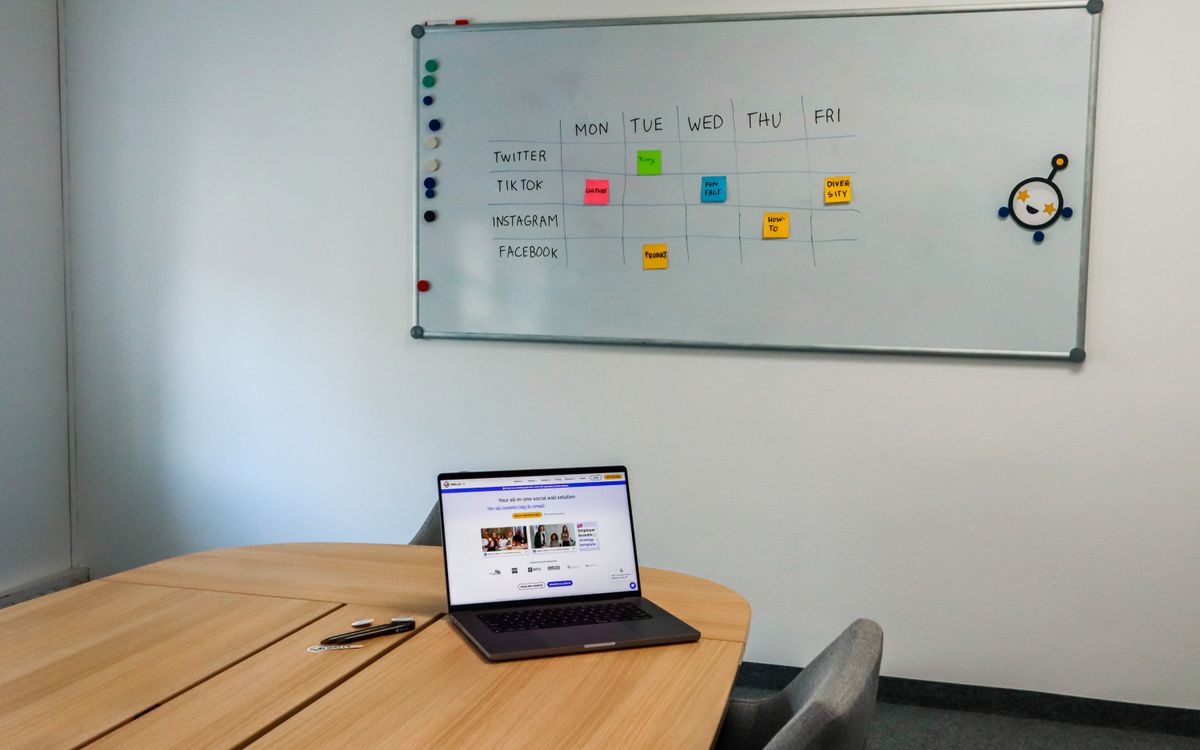
There's also a quieter cost: inconsistency. A founder running a 20-person company can't post daily for 18 straight months without gaps. Gaps kill momentum on platforms that reward consistency, and recovering from a 3-week silence often takes longer than the silence itself.
What A Social Media Marketing Agency Actually Does Differently
A capable agency social media marketing team brings three things a solo founder usually can't replicate alone: a repeatable content system, a dedicated person watching performance daily, and bench strength when someone's on leave or a shoot falls through.
Good social media marketing services aren't about posting more, they're about posting the right thing, to the right audience, on a cadence you can sustain for a year, not a month.
Here's what that typically includes:
- Strategy and audience mapping: who you're actually talking to, not who you assume.
- Content calendar and production: scripted, shot, edited, scheduled on a fixed weekly rhythm.
- Community management: DMs and comments answered inside hours, not days.
- Reporting: reach, saves, and conversions tracked against a number you agreed on upfront.
- Paid amplification: boosting the posts that are already working instead of guessing blind.
Pricing in India for a serious digital marketing agency running this full stack usually sits between ₹35,000 and ₹1,20,000 a month. It depends on platforms, content volume, and whether paid ads sit inside the scope.
Freelancers can come in cheaper, but you lose redundancy. One person going on leave means your whole calendar stalls, and there's no backup plan.
The Founder Math: When DIY Still Wins
DIY wins in a few specific situations, and it's worth naming them honestly.
If you're pre-revenue and validating a product, your time is better spent talking to customers directly than perfecting a content calendar. Posting from your own account also builds founder credibility that an agency voice can't fake in the early days.
It also wins if your business genuinely has no content to make yet. A founder with one SKU and no customer stories should focus on getting the first 20 customers before thinking about a content engine at all.

The skincare founder from Pune fell into a middle zone. She had enough customers to mine for stories, but not enough hours in her week to shoot, edit, and post consistently. That's where most founders actually sit, and it's where the DIY math stops holding up.
The Founder Math: When An Agency Wins
An agency earns its fee once three things are true at the same time: you have paying customers, you have a repeatable product story, and your own time is worth more spent elsewhere.
Run the comparison plainly. DIY cost her roughly ₹48,000 a month in opportunity cost for an inconsistent output.
A mid-tier agency quote came in at ₹55,000 a month for a dedicated content system, daily community management, and monthly reporting she could actually read. The real delta wasn't ₹7,000, it was getting 8 hours a week back to run the business.
She also gained consistency she couldn't have produced solo, even on her most disciplined week.
This is also where a digital marketing agency with real reporting discipline matters more than one that just posts pretty content. Ask any vendor you're evaluating to show you a client report, not a mood board, before you sign anything.

A Hybrid Path Most Founders Skip
Few founders realize there's a middle option: keep the founder voice for LinkedIn or personal posts, and hand the brand's Instagram and content production to a team. You don't have to pick one lane for every channel.
This hybrid approach works especially well for B2B founders building a personal brand alongside the company page, since buyers often trust the person before they trust the logo. It also keeps your founder-led credibility intact while the operational grind moves off your plate.
If you're weighing this against other growth levers entirely, it helps to read how thought leadership content compares to paid ads for founders working with a tighter budget.
Questions To Ask Before You Decide
Before hiring anyone, or deciding to keep doing it yourself for another quarter, answer these honestly:
- How many hours a week am I actually spending on content right now, and what am I not doing instead?
- Do I have at least 3 months of customer stories or product moments worth turning into content?
- Can I commit to a cadence for 6 months even through a busy sales quarter?
- Do I need reporting I can show a co-founder or investor, or is engagement enough for now?
- Is my weak spot content creation, or is it strategy and consistency?
That last question matters most. Plenty of founders don't actually need more content, they need a plan they'll stick to.
There's a quick test for this. Pull up your last 90 days of posts. If the gaps between posts are wider than a week, more than once, that's usually a systems problem, not a content one.
More content won't fix a broken system, a calendar and an owner will.
This is also where many founders confuse symptoms with causes. Low reach doesn't always mean bad content, sometimes it means irregular posting that the algorithm reads as low commitment. Fixing the rhythm often moves the numbers before a single new idea gets added.
What To Look For In A Social Media Marketing Agency
If the math points toward hiring, don't just compare price sheets. Compare how a shortlist of agency social media marketing teams actually works.
Ask for a sample content calendar from a client in a similar space. Ask how fast they respond to comments and DMs, since slow replies quietly damage trust.
Ask what happens when your main point of contact is unavailable. Bench depth is the whole reason you're paying more than a freelancer.
It also helps to understand how a digital marketing agency differs from a boutique specialist before you sign, since the right fit depends on your stage, not just your budget.
One more thing worth checking: how they handle a bad week. Every brand eventually posts something that lands flat, or draws an unexpected comment thread.
Ask a shortlisted agency how they've handled that before. Not in theory, with an actual example. Real cases tell you more than any pitch deck.
Watch out for agencies that quote one flat number for "social media marketing" without separating content from paid spend. Those are two different budgets. Conflating them makes it hard to tell what's actually working.
A transparent quote breaks out production cost, management fee, and ad spend as three separate lines.
Ask for that breakdown even if the agency doesn't offer it upfront. Founders who skip this step often discover six months in that most of the invoice was going to management fees, not actual reach, which is a genuinely frustrating, expensive way to learn a lesson that one direct question at the very start would have answered for free, before any money changed hands at all.
Takeaways
- DIY has a real cost even when no invoice is issued, factor in your own time honestly.
- An agency earns its fee when you have customers, stories, and a time constraint, all three together.
- Reporting discipline separates a serious agency from one that just posts content.
- A hybrid model, founder voice plus agency production, works well for B2B and personal-brand-driven businesses.
- Don't decide on price alone, compare response speed, bench strength, and sample calendars.
If you're still unsure which side of this line your business sits on, it's worth a short conversation rather than another month of guessing. You can see how we approach this for founders on our performance marketing page, browse real client outcomes on why founders choose us, or book a 30-minute call to walk through your specific numbers.